Flodesk new pricing: Is it still worth it without unlimited?
 By David Nge | Last Updated: December 09, 2025
My work is supported by affiliate commissions. Learn More
By David Nge | Last Updated: December 09, 2025
My work is supported by affiliate commissions. Learn More
Flodesk made waves in the email marketing world with its unlimited pricing model - one flat fee for unlimited subscribers and emails.
Which was unheard of.
That changed in late 2025 when the company retired its unlimited plan and introduced tiered, subscriber-based pricing.
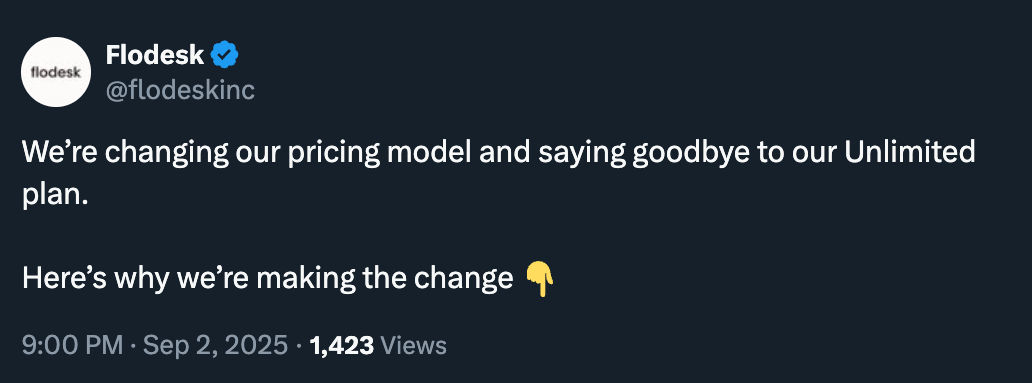
If you're evaluating Flodesk now, here's what you need to know about the new pricing structure and whether it still makes sense for your business.
On December 2, 2025, Flodesk officially moved to a tiered pricing model for all new customers.
The unlimited plan, which allowed unlimited subscribers and sends for one flat rate ($38/month) is no longer available to new sign-ups.
Why the change?
Basically, Flodesk's co-founders cited sustainability as the primary reason. While the unlimited model was generous and unique in the industry, it was clear it wasn't viable as the company scaled.
Moving to a tiered pricing aligns costs with usage, improves deliverability (by encouraging list hygiene), and funds ongoing feature development for the long term.
New features they have launched since:
and more...
If you were already on an unlimited plan before December 1, 2025, you're grandfathered indefinitely as long as you don't cancel or downgrade. Your pricing stays the same regardless of how much your list grows.
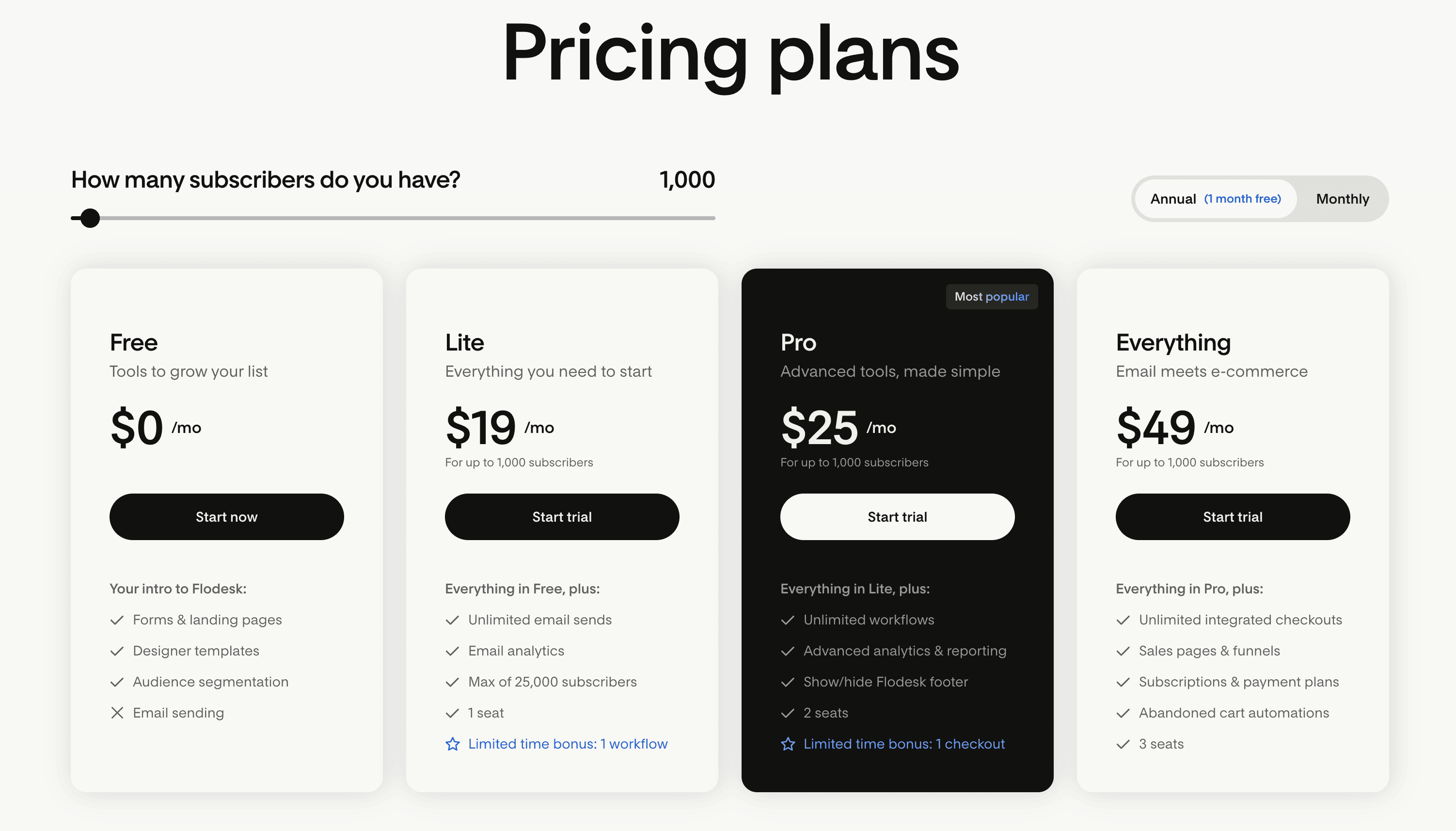
Flodesk now offers three paid plans and one free plan. All paid plans include unlimited email sends, but differ in subscriber limits and features.
Free Plan ($0/month)
This isn't really an email marketing plan, instead, it's a list-building tool. You can create unlimited opt-in forms and landing pages, segment your audience, and design emails using Flodesk's templates.
But you can't actually send any emails. To send campaigns, you need to upgrade to a paid plan.
Paid plans ($19/month and up)
| Subscribers | Monthly Price |
|---|---|
| 1,000 | $19 |
| 2,500 | $29 |
| 5,000 | $48 |
| 10,000 | $66 |
| 20,000 | $121 |
| 25,000 | $149 |
| 50,000 | $357 |
| 75,000 | $467 |
| 100,000 | $632 |
The entry-level paid tier (Lite) starts around $19/month for your first 1,000 subscribers, scaling up as your list grows (roughly $48/month at 5,000 subscribers, $66/month at 10,000).
What you get:
What's excluded in the Lite plan:
The mid-tier option includes everything in Lite, plus:
Note that Pricing scales with list size, you can
The top tier includes all Pro features, plus full e-commerce capabilities:
This plan starts at about $54/month (annual billing) for 1,000 subscribers and scales up from there.
You can use Flodesk's interactive pricing calculator to see exactly what you'd pay at your current list size.
One notable feature of the new pricing system — Flodesk automatically moves you between tiers as your list size changes.
If you exceed your current tier's subscriber limit, you're automatically upgraded to the next tier at your next billing cycle.
You'll get notifications at 90%, 95%, and 100% of your limit, so there shouldn't be surprises.
The same works in reverse.
If you clean your list and drop below a tier threshold, you'll automatically downgrade at renewal.
If you're auto-upgraded but then shrink back down within 30 days, you can request a refund.
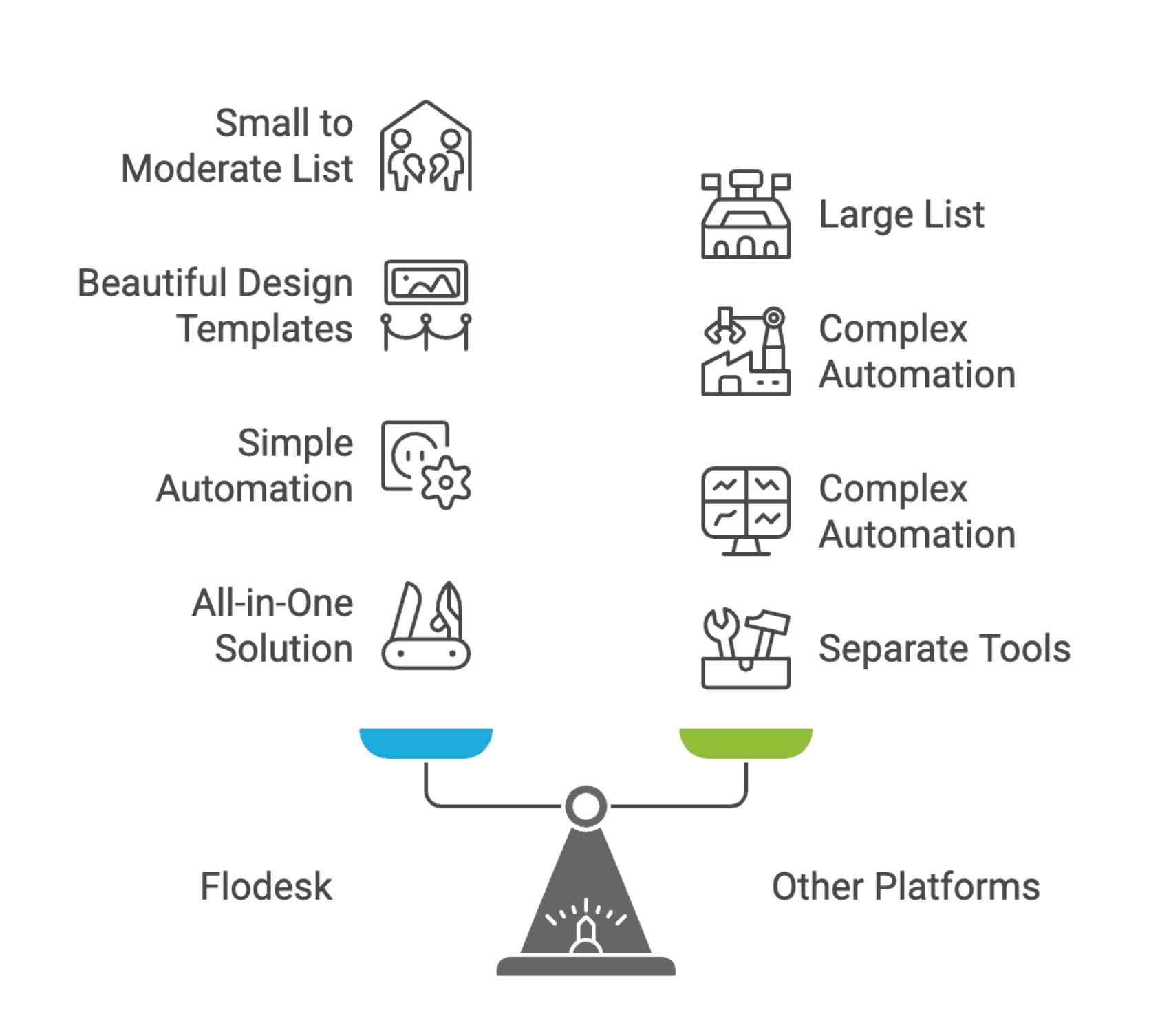
As cliché as it sounds, it depends entirely on your list size and what you value.
Flodesk makes sense if you:
Flodesk might not be worth it if you:
For a more detailed comparison between Flodesk and other email marketing platforms, check this article.
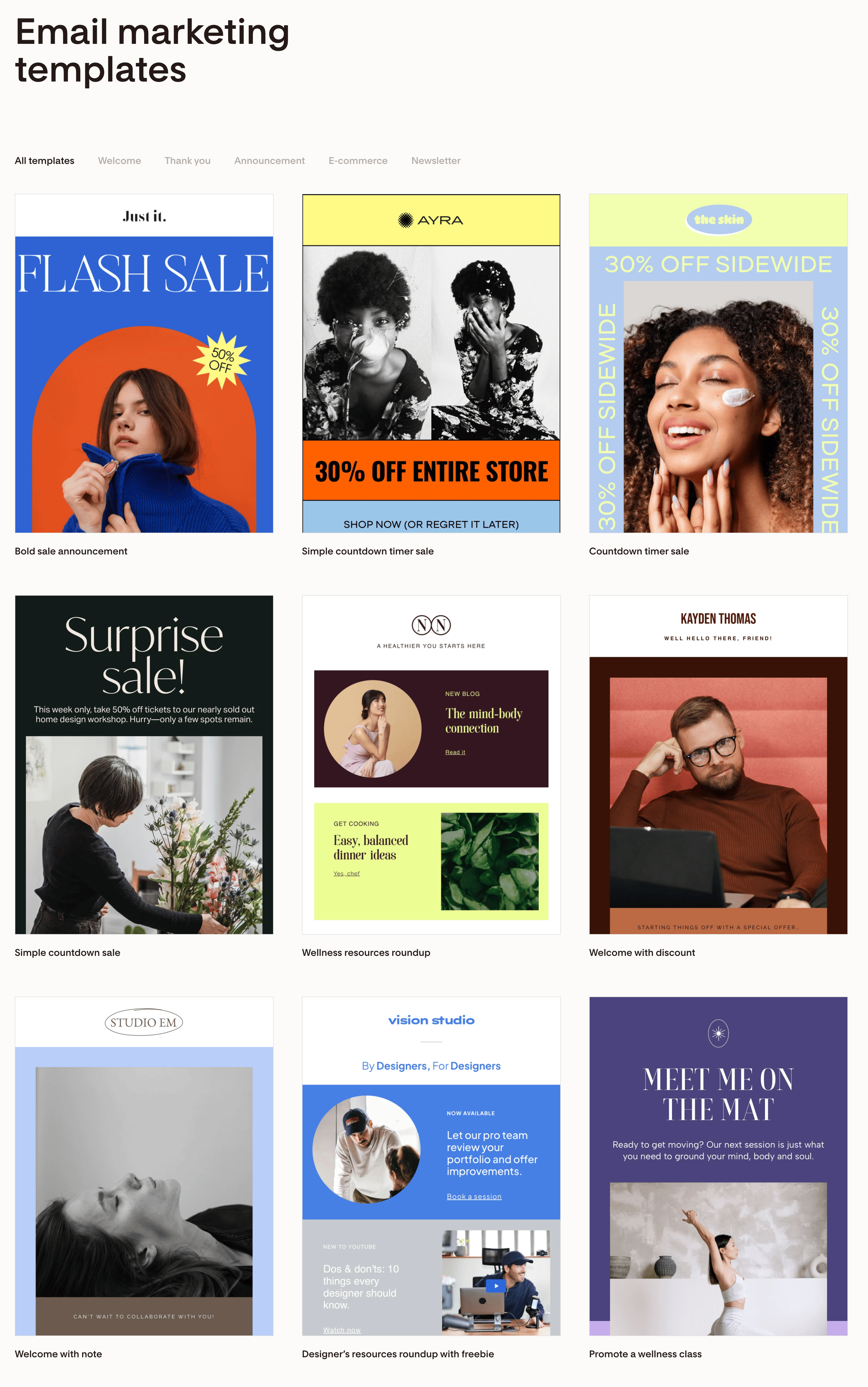
While Flodesk ditched its unlimited bargain plan, it's still one of the most design-forward, user-friendly email platforms in the market.
If you're grandfathered into the unlimited plan: Keep it. Don't cancel. It's one of the best deals in email marketing.
If you're new to Flodesk: Run the numbers for your business. For moderate lists and creators who prioritize design over complex features, it's still a solid choice. But for fast growing businesses on a budget, you may find better value with MailerLite, GetResponse, or Kit depending on your needs.
For service businesses needing CRM: Pair a lightweight ESP like MailerLite with a dedicated CRM, or go with HubSpot if unified reporting is critical.
David Nge is the founder and writer behind MakingThatWebsite.com. Since launching in 2021, he’s been on a mission to help non-techies—especially small business owners—build better websites using easy-to-learn tools and smart, time-saving strategies. He specializes in website builders, SEO, and practical AI tutorials for small business owners.
Have a tutorial you want to learn? Leave a suggestion here.